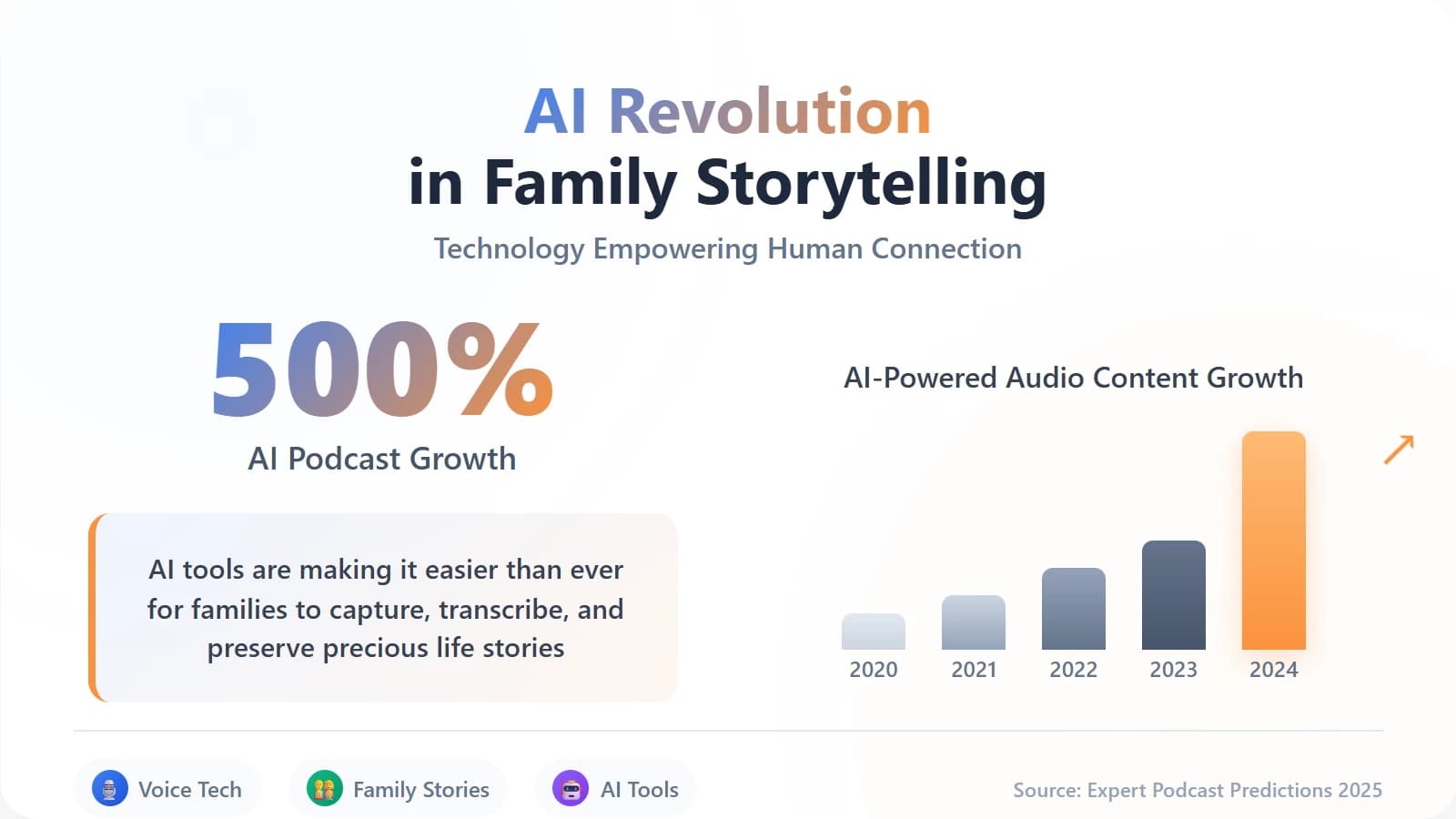
TL;DR. AI isn't replacing human storytelling. It's doing three specific jobs that communities and families couldn't scale before: interviewing residents patiently (through Ali, the AI biographer), producing finished 3–5 minute podcast episodes for about $1.50–$2.50 each instead of $200–$500, and delivering stories across distance so a daughter in Seattle can hear her mother in Austin. Consent and privacy stay under human control throughout.
Kindred Podcasts is a podcast platform built for senior-living communities and families. It uses AI to capture resident life stories, turn them into short podcast episodes, and get them to the people who care about hearing them. The rest of this post is about how each of those steps actually works, what the technology does (and doesn't do), and why the research suggests it matters.
There's an uncomfortable irony in the AI conversation. The technology people fear will make the world less human might be the best tool we have for preserving the most human thing there is. Stories.
We've spent years at Kindred Tales helping families capture personal stories in hardcover memoirs. We've seen what happens when a grandmother's memory of her childhood home gets written down for the first time, or when a veteran's wartime experience finally reaches his grandchildren. Those moments are irreplaceable. And they're disappearing.
The Scale of the Problem
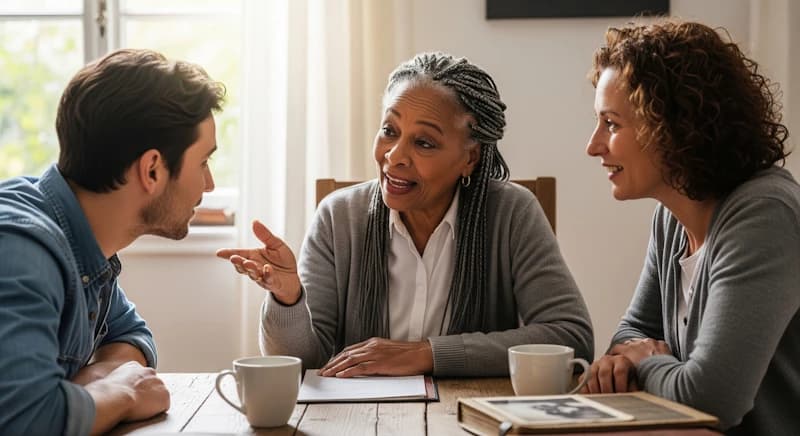
About 10,000 Americans turn 65 every day. The average assisted-living community has 50–150 residents, most of whom carry decades of untold stories. When those residents pass (roughly 2 million Americans over 65 die each year), their stories go with them.
This isn't a sentimental observation. It's a cultural crisis. The Library of Congress, the Smithsonian, and dozens of oral history projects have been racing to capture first-person accounts from aging populations for decades. They can't scale fast enough. There aren't enough interviewers, enough hours, or enough resources to reach every person with a story worth telling.
Enter AI, Not as a Replacement, But as an Amplifier
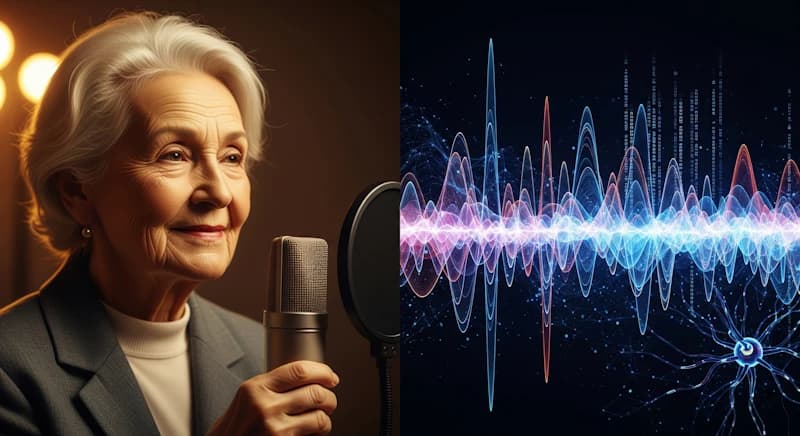
When people hear "AI" and "stories" in the same sentence, the reaction is often defensive. AI can't tell stories. AI can't feel. AI doesn't understand what it means to be human.
That's right. AI can't replace the human experience of storytelling. But it can do three things that humans alone can't.
1. AI Can Interview at Scale
Ali, our AI interviewer, conducts thoughtful, patient conversations with residents. She asks follow-up questions, digs into interesting threads, and guides the story forward. Ali doesn't get tired. She doesn't have other residents to attend to. She doesn't take a lunch break.
This doesn't replace staff-assisted interviews. It extends them. An activity director who can personally interview 2–3 residents per week can now support 20–30 residents participating in AI conversations alongside regular programming.
Ali combines real-time voice transcription (AssemblyAI), conversational AI for generating follow-up questions (tuned for speed and natural flow), and voice synthesis (ElevenLabs) so she speaks in a warm, consistent voice. The result is a conversation that feels natural.
2. AI Can Produce Content Without Production Crews
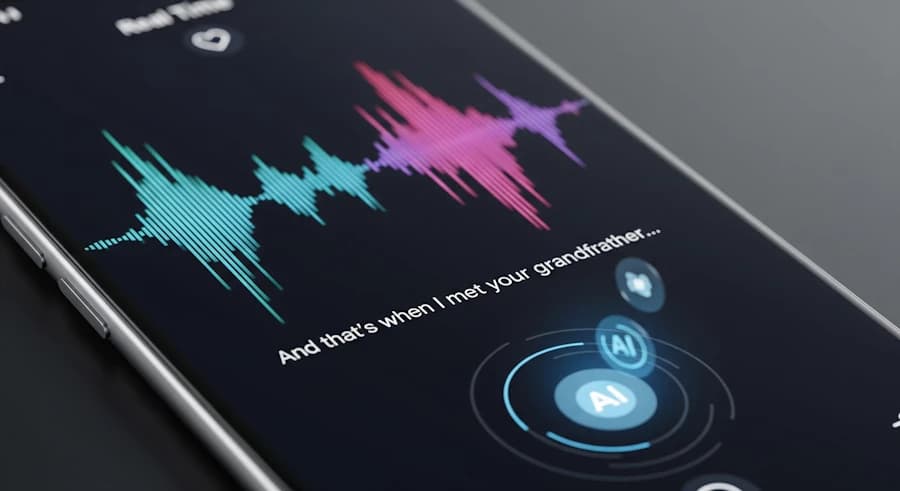
Turning a raw interview into a polished audio piece traditionally requires a producer, an editor, and sometimes a narrator. That's expensive and slow. Outsourced, it runs $200–$500 per finished episode.
Our AI pipeline takes a raw transcript and produces a finished podcast episode for $1.50–$2.50 each. The steps:
- The transcript is cleaned and organized.
- A script is generated with natural host dialogue: two hosts in conversation, a single narrator, or a word-for-word reading.
- Voice synthesis creates the audio with distinct, natural-sounding voices.
- The episode is 3–5 minutes long and ready to share.
This isn't about cutting corners. It's about making something possible that wasn't before. No senior-living community has the budget to hire a podcast production team. Every community can afford $1.50 per episode.
3. AI Can Bridge the Distance Gap
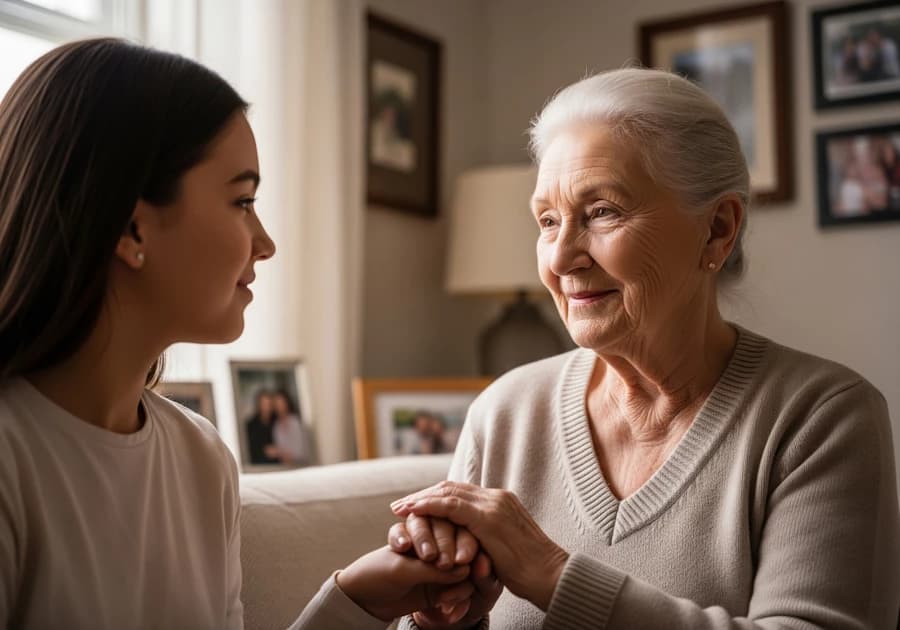
Families who live far from their loved ones face a painful reality. They can't visit as often as they want. Video calls help, but they need scheduling, tech setup, and energy that isn't always available for either side.
AI-assisted podcast generation solves this in both directions:
- From family to resident: Families write a short newsletter with photos and updates. AI turns each update into a podcast episode (conversational or narrated) and delivers it. No scheduling. The resident listens whenever they want.
- From resident to family: Resident stories captured through interviews or prompts become episodes that families can listen to from anywhere. A daughter in Seattle can hear her mother in Austin share a memory she never knew about.
The 24/7 Ambient Channel
One of the most useful applications of this technology is what we call the ambient podcast channel. Senior-living communities play a continuous stream of content in common areas (lobbies, dining rooms, activity spaces) that includes:
- Curated oral histories from public-domain sources (WPA narratives, Library of Congress collections)
- Resident stories from the community, with consent
- Family contributions from connected families
Staff curate playlists by theme and filter sensitive content. The result is meaningful background programming that starts conversations. It's a real improvement over the generic music or cable news that usually fills those spaces.
The Ethics of AI in Senior Care
We take the ethical dimensions seriously. Here's how we approach them.
Consent is non-negotiable. Every resident needs explicit consent (from themselves or their designated guardian) before any story capture begins. Consent can be revoked at any time, and associated content is immediately hidden.
AI assists; it doesn't decide. Ali asks questions, but the resident decides what to share. Staff can review and approve episodes before sharing. Families control their own content. The AI is a tool, not a gatekeeper.
The human voice is preserved. AI generates the podcast hosts' voices, but the stories come from real people sharing real experiences. We aren't creating fictional content. We're packaging real stories in a format people will actually listen to.
Privacy is the default. All content is private by default. Facility episodes require approval. Family content stays within the family. Nothing is shared publicly without explicit permission.
What the Data Shows
AI-assisted storytelling in senior living is new. The underlying research is not.
- Social connection reduces cognitive decline. A 2023 study in JAMA Internal Medicine found that regular social engagement reduced the risk of dementia by 35%.
- Storytelling improves wellbeing. Research from the Gerontological Society of America shows narrative-based interventions improve mood, reduce agitation, and increase social participation among older adults.
- Family engagement drives satisfaction. The National Center for Assisted Living reports that family involvement is the #1 predictor of resident and family satisfaction scores.
Lowering the barriers to story capture and family connection increases the volume and frequency of these interactions.
The Business Case
This isn't just about doing good, though that matters. There's a clear business case for senior-living communities.
- Family engagement drives referrals. When families feel connected to a community, they talk about it. Word-of-mouth referrals are the #1 source of new move-ins for independent and assisted living.
- Differentiation matters. In a competitive market, the communities with unique, meaningful programming stand out. "We turn your loved one into a podcaster" is a tour moment your competitors can't match.
- The ROI is asymmetric. If Kindred Podcasts helps one family choose your community over a competitor, that's $24,000+ in annual revenue from a single move-in. Our most-chosen plan is $899/month.
The Future
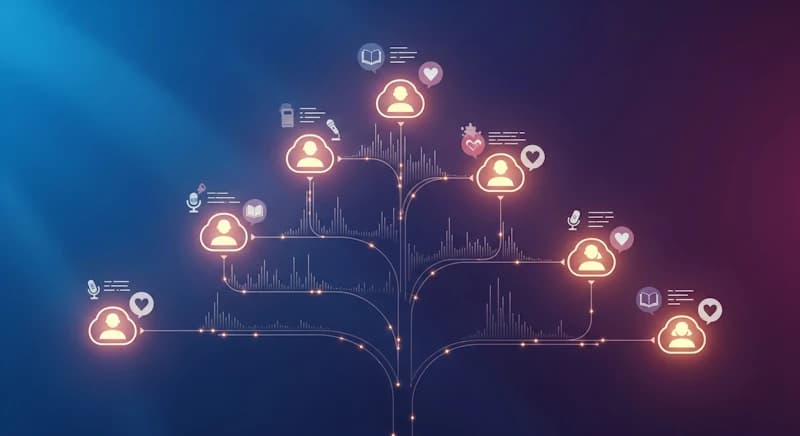
We're at the very beginning of what AI can do for intergenerational connection. Today we turn stories into podcast episodes. Tomorrow we might be:
- Creating personalized audiobooks of a resident's life story, narrated in a voice their family recognizes.
- Generating interactive memory experiences that combine photos, audio, and narrative.
- Connecting residents across communities who share similar life experiences.
- Preserving not just stories but the cadence, rhythm, and personality of how someone speaks.
The technology will keep getting better. The mission stays the same. Every person has a story worth hearing. Every family deserves to hear it. Every community should be the place where those stories are captured, shared, and celebrated.
Nick Hern is the founder of Kindred Tales and Kindred Podcasts. Learn more about how Kindred Podcasts supports your community at kindredpodcasts.com or book a demo.